Home › Commercial Asphalt Resurfacing & Overlays
Refresh aging pavement with commercial asphalt resurfacing in Austin, TX. When the base is sound, a mill and overlay or asphalt overlay can restore a smooth surface and extend pavement life. We resurface shopping centers, offices, warehouses, and HOAs with minimal downtime so your property looks clean and professional again.
Precision Asphalt Austin provides professional commercial asphalt resurfacing throughout Austin, TX, Texas and the surrounding area. Our licensed, insured crew delivers safe, clean, on-time work with a free estimate before anything begins. Call (737) 530-7711 or request your free quote.
Commercial Asphalt Resurfacing & Overlays for Austin Properties
Commercial asphalt resurfacing is often the most cost-effective way to restore a worn parking lot or drive lane without paying for full-depth reconstruction. Precision Asphalt Austin focuses specifically on overlays that match Central Texas traffic conditions, soil types, and weather patterns, so your pavement holds up under real-world use.
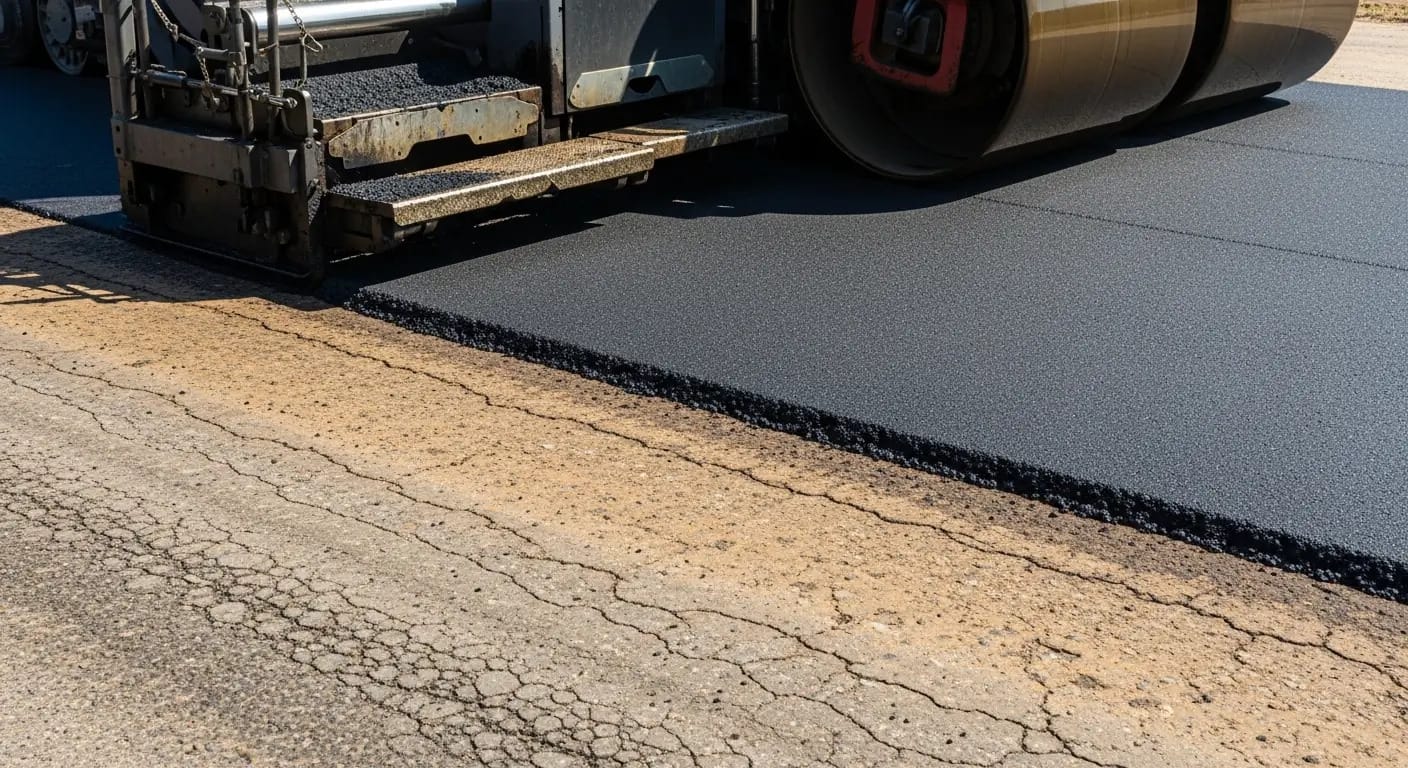
For most commercial clients in Austin, resurfacing is ideal when the surface is cracked, faded, or rough, but the base layer is still structurally sound. Instead of tearing everything out, we repair and reinforce weak areas, then place a new asphalt layer over the existing pavement. The result is a smooth, black surface that looks new, improves drainage, and adds years of service life at a fraction of full replacement cost.
We design each commercial asphalt resurfacing project around how your property actually functions: employee and customer traffic patterns, delivery truck routes, dumpster pads, and fire lanes. That means we may recommend thicker overlay sections where trash trucks turn, upgraded mix designs in loading zones, or modified slopes in front of retail storefronts so water drains away from entrances.
How Our Commercial Asphalt Resurfacing Process Works
A successful overlay starts with a detailed evaluation. A project manager from Precision Asphalt Austin walks the entire site, photographs problem areas, notes where ponding occurs after rain, and cores test spots if needed to measure existing asphalt thickness. We look for structural failures such as alligator cracking, rutting, and base pumping, because these areas must be corrected before any overlay goes down.
Once we know where the weak spots are, our crews begin with milling or grinding transitions at tie-in points, such as at city streets, loading docks, sidewalks, and drainage inlets. This prevents abrupt bumps and keeps your site ADA compliant. Next we complete full-depth repairs where the existing pavement has failed. These involve saw-cutting the damaged areas, excavating soft subgrade, compacting base rock to proper density, and installing new hot mix asphalt in compacted lifts.
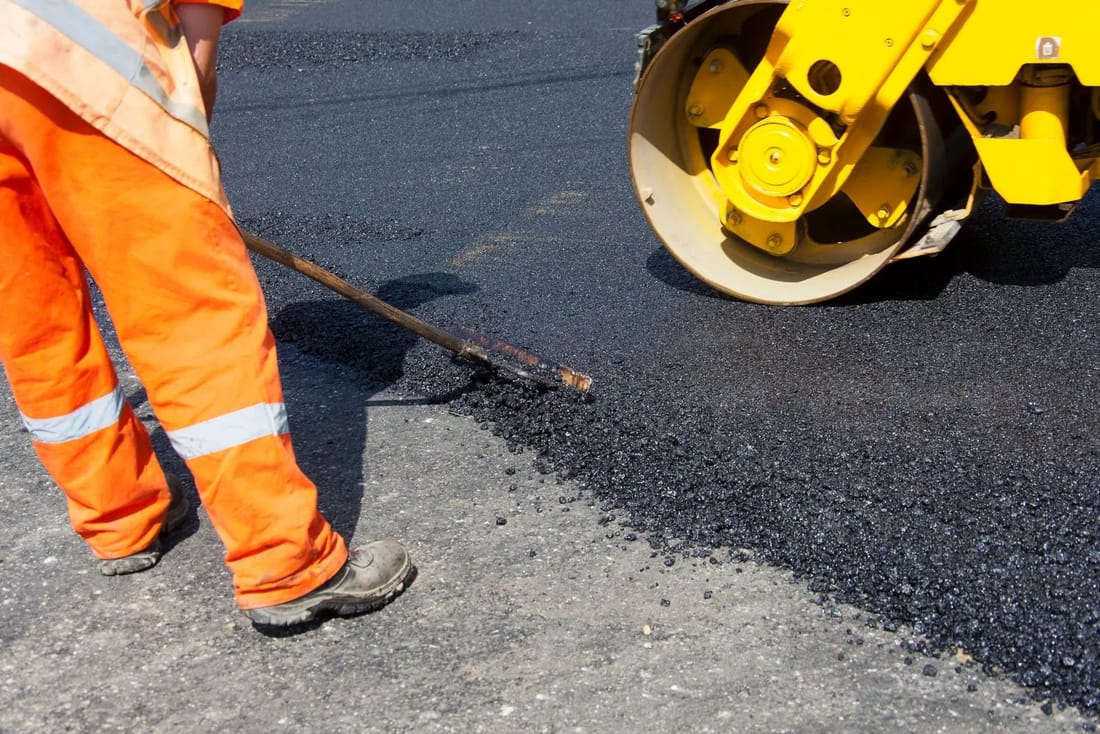
After structural repairs are complete, we clean the entire surface using mechanical sweepers and high-powered blowers so the new asphalt bonds correctly. We then apply a tack coat, a thin layer of asphalt emulsion that bonds the new overlay to the old pavement. Finally, we install the overlay, typically 1.5 to 2.5 inches thick, using commercial paving machines and steel drum rollers to achieve a smooth, dense mat. Joints, edges, and tight areas are hand worked so you do not end up with uneven transitions near curbs, drains, or building entrances.
Overlay Options, Mix Designs, and Thickness Choices
Not every overlay is the same. Precision Asphalt Austin selects mix designs and thicknesses based on how your pavement is actually used. A small office parking lot with light car traffic may only require a 1.5 inch overlay of Type D hot mix. A grocery store or distribution center with regular 18 wheeler traffic often needs a 2 inch or thicker surface course with a stiffer mix that resists rutting.
In high heat and direct sun, which are constant in Austin, we often recommend polymer modified asphalt or a mix with a slightly higher stone content in heavy-use lanes, such as drive-thrus, entrances, and main drive aisles. These mixes hold their shape better under turning traffic and summer temperatures. For steep grades or tight turning radii, we may adjust the aggregate size so the surface has enough texture for traction while still meeting ADA requirements.
We also pay close attention to transitions at concrete features such as loading docks, dumpster pads, and ADA ramps. In some cases we recommend installing concrete pads in those highest-stress locations, then tying the asphalt overlay into the concrete. This combination approach often delivers the best long-term value for retailers, churches, and multifamily properties that see a mix of passenger vehicles and heavy trucks.
Common Pavement Problems in Austin and When Overlays Work
Central Texas asphalt has to deal with expansive clay soils, intense sun, and rapid temperature swings. In Austin, we frequently see reflective cracking from older pavement layers, raveling where stone begins to loosen, and drainage-related failures where water sits for hours after a storm. Commercial asphalt resurfacing is an ideal solution for many of these issues, but not all of them.
If your parking lot has widespread alligator cracking, deep ruts where trucks travel, or visible pumping of water and fines from beneath the surface, these usually indicate base failure. In those areas, a simple overlay will not last. Precision Asphalt Austin identifies those sections and recommends base repair or partial reconstruction before overlaying. On the other hand, if your pavement is mainly oxidized, lightly cracked, and rough but stable, a properly designed overlay can restore function and appearance for another 8 to 15 years.
Because Austin receives periodic heavy storms, we evaluate how your lot drains before recommending resurfacing. If water is ponding in the same spots after every rain, we may correct slopes during the milling and overlay phase, or install additional inlets or swales. Correcting drainage as part of the overlay project is one of the most effective ways to extend the life of your new surface.
What Affects Commercial Asphalt Resurfacing Cost
Two parking lots can be the same size but have very different resurfacing costs. The number one cost driver is how many square yards require base repair versus simple overlay. Full-depth patching is more labor and material intensive than placing a uniform overlay, so a lot with scattered structural failures will price differently than one that only needs surface improvement.
Overlay thickness is another major factor. Increasing the overlay from 1.5 inches to 2.5 inches can significantly affect material costs, but in high-traffic or truck areas that added thickness can double the service life. At Precision Asphalt Austin, we explain where extra thickness makes sense and where it does not, so you can align your scope with your budget and risk tolerance.
Access and staging also influence price. If your business operates 7 days a week or 24 hours a day, we may need to phase work in smaller sections, schedule night or weekend paving, or coordinate around deliveries. This can add labor and mobilization costs but keeps your operation moving. Finally, layout items such as extensive striping, signage, wheel stops, and ADA upgrades are part of the total project cost, and we include them clearly in our proposals so you understand the complete investment.
Minimizing Disruption to Your Tenants, Guests, and Operations
For commercial properties, the biggest concern with resurfacing is disruption. Precision Asphalt Austin plans overlay projects around how your site operates, with phasing maps that show which areas will be closed and when. For retail centers, we often pave early mornings or evenings and reopen sections as soon as compaction and striping are complete. For office parks, we may divide the lot into halves or quadrants so employees always have available parking.
We coordinate with property managers and facility teams in advance, providing notices you can send to tenants that explain closure times, towing plans if needed, and where to park during each phase. On multifamily sites, we recommend staging areas away from main building entrances and clear barricades so residents can still access mailboxes, trash enclosures, and amenities.
Safety is a priority throughout the project. Our crews use barricades, cones, and clear signage to separate work zones from active traffic. We also maintain access for emergency vehicles at all times. By tightly managing scheduling and communication, we keep resurfacing projects efficient without surprising tenants or customers.
What You Should Know Before Hiring a Commercial Paving Contractor
Choosing the right contractor for commercial asphalt resurfacing in Austin is about more than just the lowest number on a proposal. Ask to see recent overlay projects that handle similar traffic volumes to your property, and verify that the contractor is familiar with City of Austin standards when work ties into public streets or sidewalks.
Request a written scope that details overlay thickness, repair quantities, mix types, and how transitions will be handled at gutters, ADA ramps, and drainage structures. If a proposal only mentions a generic overlay without addressing structural repairs or drainage, you are at risk of paying for a surface that looks good initially but fails prematurely.
At Precision Asphalt Austin, we provide clear line items for milling, base repair, overlay thickness, tack coat, striping, and ADA improvements, along with an anticipated project schedule. We carry proper insurance and keep our equipment maintained so paving is done at the correct temperatures and compaction levels. When you are comparing quotes, look at the follow-up provisions too, such as warranty terms and how punch list items are handled. The right resurfacing partner should help you plan long term, including sealcoating and maintenance schedules, so your new asphalt overlay delivers the full value of your investment.